

Pickleball is a quick and easy game to play. As players become more successful, they learn smart team strategies to improve their performance. Stacking in pickleball is one such smart strategy used by doubles players. However, some beginners find the term stacking confusing at first and may struggle to understand what it really means. With a little practice and guidance, this concept becomes much easier to grasp.
In reality, stacking is simply a positioning strategy used by doubles players to get to the proper spot on the court. It guarantees that players are playing at their best. Instead of working in singles, the stacking strategy is used in doubles. Understanding stacking can be very beneficial. After you understand the basics of stacking, it turns into an easy but powerful technique. Let’s explore it:
Basic Meaning of Stacking in Pickleball
Pickleball stacking is the practice of placing both partners on one side of the court before a serve or return to play to their respective sides. When serving in doubles matches, players must follow the order. One could find themselves on a side they dislike as a result of this reason.
Being on one side allows both players to return to their comfort side after the ball has been hit, which makes it a good position. Because their hand can reach the middle point, forcing the opponent to use the return, most right-handed people prefer to be on the left side. The middle section of the court is important when it comes to winning games.
Why Players Use Stacking Strategy
When playing doubles, stacking gives each player an important competitive edge, which is why players use it. For example, placing each player on their strong side is the first of the primary motivations. In this case, stacking makes sure that both players use their dominant sides when one has a good forehand and the other a strong backhand. Communication is another variable.
Both teams know where they stand after the serve, so they are unable to become confused and make mistakes. Last but not least, stacking helps guarantee that the opponents are positioned in the middle, which is where winning shots are typically served. As a result, these areas allow opponents opportunities to make mistakes when they are targeted.
How Stacking Works During the Serve
Stacking in pickleball comes before the serve, as the name suggests. The non-serving partner is allowed to stand even in the non-corresponding court while the standard serving procedure is still followed. Once the serve is completed, the pair can move between the sides of the court more easily because the non-serving player usually stands near the centre line.
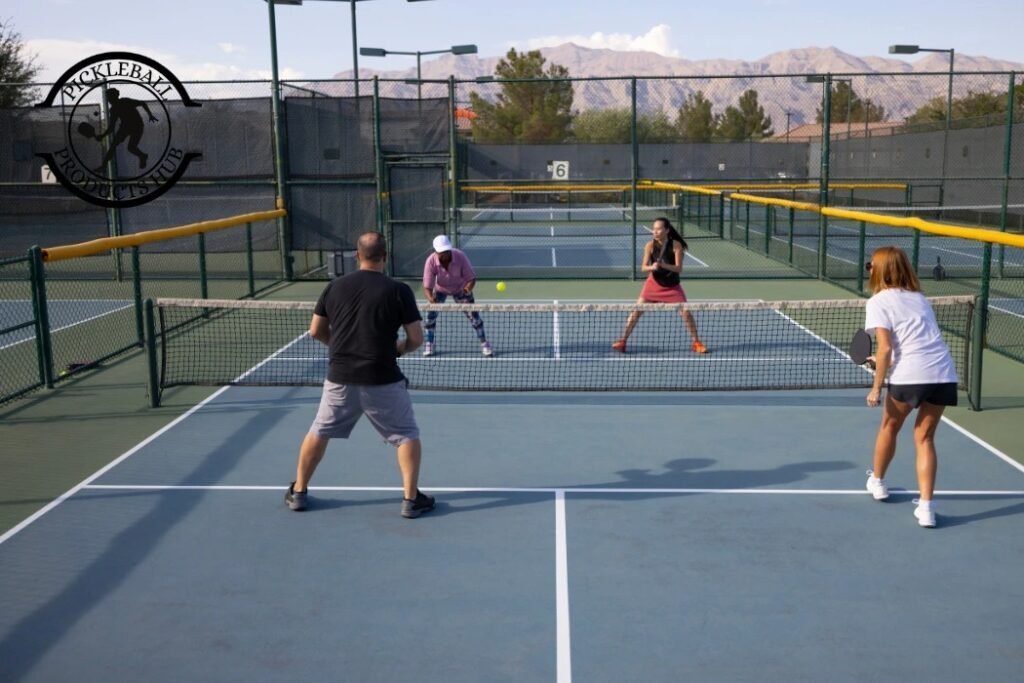
The partners shift to their preferred side as soon as the ball crosses the net. When it comes to the serve stacking process, time is important. In order for the process to seem like an easy movement between the partners, the players must move quickly but carefully. This is because effective communication makes the process go more smoothly.
How Stacking Works During the Return of Serve
The receiving team may also use stacking. The receiver maintains the appropriate receiving position according to the regulations when the returning team uses the stack formation. After the ball is returned, the opposite player can exchange sides by positioning themselves beyond the sideline or close to the centre.
These players may move quickly into the position they want once the return ball has crossed the net. Since the other team will serve the third shot, the players must move their feet quickly. The players may leave the court partially open if they take a long time to get to their position.
Different Types of Stacking Formations
Different teams use stacking in different ways. Some teams engage in full stacking, which involves changing sides every time a team hits or receives a ball to make sure everyone is on their preferred side. Others choose a different strategy, practicing only a limited amount of stacking.
Which means that only a select few players switch sides during particular situations, such as when a player on one side serves. Beginning with only a small amount of stacking is more practical for beginners because it is simpler to remember, but full stacking requires an improved understanding of the game’s events, such as the score and serving technique.
Stacking in Competitive Vs Casual Games
It is more likely to happen when playing competitive games as compared to casual ones. Sometimes the result of competitive games is determined by the difference between winning and losing. Stacking is a strategy used in competitive games to maximize strengths and reduce weaknesses. Stacking may not always be necessary in casual games since the main goal may be to have fun and play simple games.
To enhance stacking abilities without rivalry, it is advisable to think about playing friendly games. Players must accelerate, communicate effectively, and fully follow the regulations in competitive games. Casual games provide players with an environment in which they can learn. Gaining comfort in the stacking strategy requires playing both games.
Advantages of Stacking in Doubles Play
Using the finest skills of both players is one benefit that stacking offers the squad. For example, if every team has forehand talents and is right-handed, they would want to have their forehands on the centre line. Stacking helps in achieving this. The cooperation and coordination of each person is another benefit of stacking. Everyone is more assured because they all know exactly where to go.
Because they are not used to this strategy, stacking may also cause some confusion for the opposition, which could lead to poor shots from them. The last benefit is that since everything has been prepared and practiced, stacking helps the players avoid confusion about the position to believe.
Disadvantages and Risks of Stacking
It is important to remember that stacking involves certain risks with its many benefits. Failing to remember the proper stacking order is the main risk involved in stacking. While following pickleball regulations is always important, it is a mistake to forget the score. The slow speed of movement is another danger of stacking.
Players are supposed to move fast after serving and returning a ball. Because of this, if they move slowly, they open up the court, giving their opponents a point of attack. It should be noted that communication is necessary for stacking. Because stacking calls for patience and skill, beginners typically find it frustrating.
When Teams Should Use Stacking
Stacking should be used by teams when it clearly gives them an advantage. This is most effective when both players enjoy one side of the court or when their strengths benefit each other. Because little advantages may turn into greater benefits, stacking is frequently used in competitive matches. However, before attempting stacking, new players must understand the basic principles of placing.
If the partners still have trouble with basic communication or covering the court, stacking could cause more issues than it solves. The best time to learn how to stack safely is during practice sessions. Stacking can be introduced to enhance performance in tournaments or important matches if the team is comfortable with its movement and serving order.
How Stacking Improves Court Communication
Effective communication between the partners is ensured by stacking. There is no possibility of confusion during a match because, as was mentioned in the second stage, they already know where they are heading. Effective communication between the two players reduces the possibility that they will attempt to receive the same serve or leave the middle of the court open.

Teams that stack frequently discover that they start to show before serving and call the balls early. They therefore give each other confidence. Stress in the match is effectively reduced when both parties are aware of what the other is going to do. As a result, the group functions as a unit, and confidence comes easily.
What is the Role of Hand Dominance in Stacking Decisions
Most players are typically right-handed and like to stay on the left side to maintain control of the middle court with their forehand. In addition, stacking affects hand strength. The middle section is where many important shots are made. The ability to stack gives two right-handed players the chance to keep the better forehand in the middle more frequently.
Stacking is a much better method of positioning both forehands toward the centre for a single left-handed player. Better defense and an excellent attacking setup are offered. Knowing hand dominance enables players to select the stacking arrangement that best suits their personal style.
How Stacking Affects Shot Selection
A doubles couple’s options for shots while returning the ball during a rally are directly impacted by stacking. For example, as they will always be on their powerful side, it provides players with more confidence while hitting backhand shots. Since the middle is one of the safest strokes in doubles, players can use it as a target more often thanks to this confidence.
In addition, it will allow the couple to develop a more effective third-shot strategy. This is due to the fact that it is never done accidentally instead, it is always planned. Players have more control over their behaviors when they have an expected reaction.
How to Build Trust Between Partners Through Stacking
The relationship between the two people requires trust. Since they depend on their partner to cover their stacking area with accurate and efficient movements, the players must have trust in one another. Consistent training encourages the development of such trust between partners. Effective stacking builds a sense of friendship amongst partners throughout the game.
Each participant knows the advantages and disadvantages of the other. When there is trust between players, panic attacks are removed. Because everyone knows their position, trust promotes confidence. Essentially, because stacking encourages collaboration and trust, it is more than just a technique.
How to Keep Track of the Score While Stacking
Recalling the score and the serving position is the only difficulty that comes with stacking. It is simple to forget after the game’s many side changes. For example, in every situation, teams must remember the score. Complete focus and control are necessary for the game.
Remembering the score clearly is a good idea before you start playing the game. Remembering the players’ starting positions at the start of the game is also important. During the game, many competent teams remind one another of their positions. In stacking, players must maintain their calmness just as much as they must focus.
How Long Does It Take to Master Stacking
You can’t learn stacking all at once. New players may find the first few practices confusing. They must understand the proper position, switching between them, and the sequence in which the serve is performed. Most teams eventually pick it up in a matter of weeks.
It takes teams that have practiced frequently to reach stacking perfection. Another method to get it properly is to watch the professionals at work and compete with them. Stacking eventually becomes automatic, requiring little mental effort on the part of the brain.
Defensive Benefits of Using Stacking
Stacking has an important role in the game. Stacking is important for both defense and attackers. Players can respond well to strong attacks if they are positioned in their preferred positions. When it comes to hard drives, quick responses are important. To make sure the centre line is properly secured, stacking is necessary.
Throughout the game, the opponent primarily targets this line. It’s required to stack defensively. The opponents will be forced to shoot from the sides when one uses heroic defensive actions to keep them at bay. The opponents will probably falter with time. The team benefits from stability and balance when defensive stacking is done correctly.
Tips to Practice Stacking Effectively
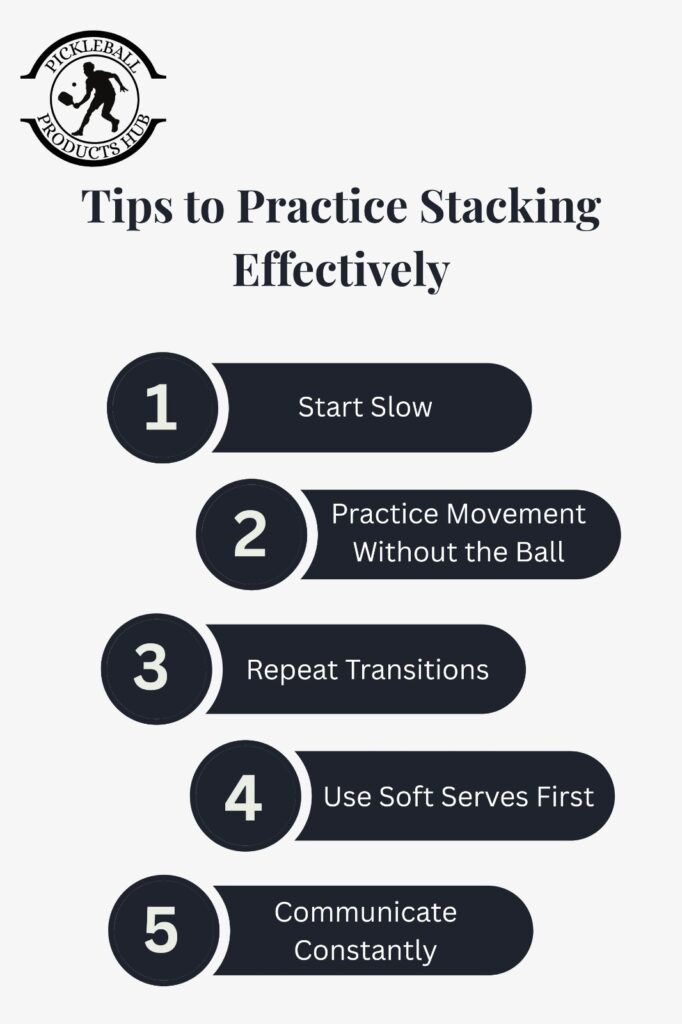
Slowing down is advised for those who want to practice stacking in pickleball. In the beginning, players must be in the proper serving position and clearly declare the score. They can then practice switching positions without the ball to build confidence. Until players feel comfortable moving to their desired spots on the court, they should repeat this process multiple times to master stacking in pickleball effectively.
Players can then concentrate only on quick switching techniques and use soft serves. The importance of communication among players requires that they communicate effectively during practice. When learning the methods at the appropriate time, seasoned players can be a huge help. One can learn stacking effectively and feel comfortable using the methods during a match with practice.
Common Mistakes Players Make While Stacking
When mastering the skill of stacking, many players make a number of common mistakes. Forgetting who is served first and in what order is one typical mistake. Confusion and occasionally issues on the game side result from this. Another common mistake made by players is to move too soon before the serve or return is complete, which is against the positioning rule.
If you move too slowly, you give the opposition a chance to attack. Another significant issue is poor communication. Both partners may attempt the same shot if it is not clear who will take the middle. Lastly, some beginners jump right into complete stacking. To minimize the majority of these typical mistakes, it is preferable to start with basic stacking slowly.
Conclusion
Pickleball players can stay on their preferred side of the court by using the clever doubles strategy known as stacking in pickleball. It may seem somewhat complicated to those who are not experienced with it, but its basic purpose is simple, as it allows your teammate to play to their forehand strengths while providing middle coverage. When done correctly, stacking in pickleball improves communication, team spirit, and overall court control.
But learning this does require a lot of practice, concentration, and thorough knowledge of serving order regulations. Before incorporating stacking into their game, beginners should become proficient in basic placing. It becomes instinctive with practice and can provide you with an important advantage in competitive doubles matches.
FAQs
1. What is stacking in pickleball in simple words?
Stacking is a doubles strategy where partners start on one side and then switch positions after the serve or return to stay on their preferred side.
2. Is stacking allowed in official pickleball matches?
Yes, stacking is completely allowed as long as players follow serving order and positioning rules correctly.
3. Do beginners need to use stacking?
No, beginners can first learn basic positioning. Stacking is more helpful for intermediate and advanced players.
4. Does stacking work in singles play?
No, stacking is mainly used in doubles because singles players cover the entire court alone.
5. Why do right-handed players prefer stacking?
Many right-handed players want their forehand to cover the middle of the court. Stacking helps them stay in that strong position.