
Pickleball is one of the fastest-growing sports in the world, especially popular among beginners, seniors, and recreational players. Because the court is smaller and the paddle is lighter, the sport first seems simple, but it requires fast movements, sudden stops, quick swings, and steady motions. As a result, many pickleball players suffer injuries that may be easily prevented with the right pickleball stretching exercises to prevent injuries before and after the game.
Stretching is more than simply a warm-up sport, it’s important for maintaining your health, flexibility, and pain-free pickleball game. This article will go over the benefits of stretching, which body areas require stretching, and how stretching correctly can help avoid pickleball injuries. Let’s explore it:
Why Stretching Is Important in Pickleball
Stretching is an important activity that keeps the body safe while playing pickleball. Lunges, reaches, overhead swings, and quick direction changes are all part of pickleball. These behaviors can result in injury when muscles are tight. Muscles may move freely without hurting or pulling when they are stretched.
Players’ muscles get more blood when they stretch. As a result, the muscles receive more oxygen and are prepared for action. The muscles will be strong to unexpected injuries since they will be warm and flexible. Players need to be able to move freely on the court, and stretching helps to increase joint flexibility.
Common Pickleball Injuries Caused by Poor Flexibility
Tight muscles and a lack of flexibility are directly linked to a large number of pickleball injuries. One of the most common diseases is muscle strain, which typically affects the lower back, hamstrings, legs, and shoulders. This typically occurs when a player makes a sudden body turn without properly preparing for it or reaches for a shot too quickly.
Because pickleball involves a lot of overhead movements, shoulder injuries are also common. Inflammation and pain arise from the shoulder muscles being weak and tight when they are not stretched. Injury to the muscles can also cause elbow pain, sometimes referred to as pickleball elbow.
Difference Between Warm-Up Stretching and Cool-Down Stretching
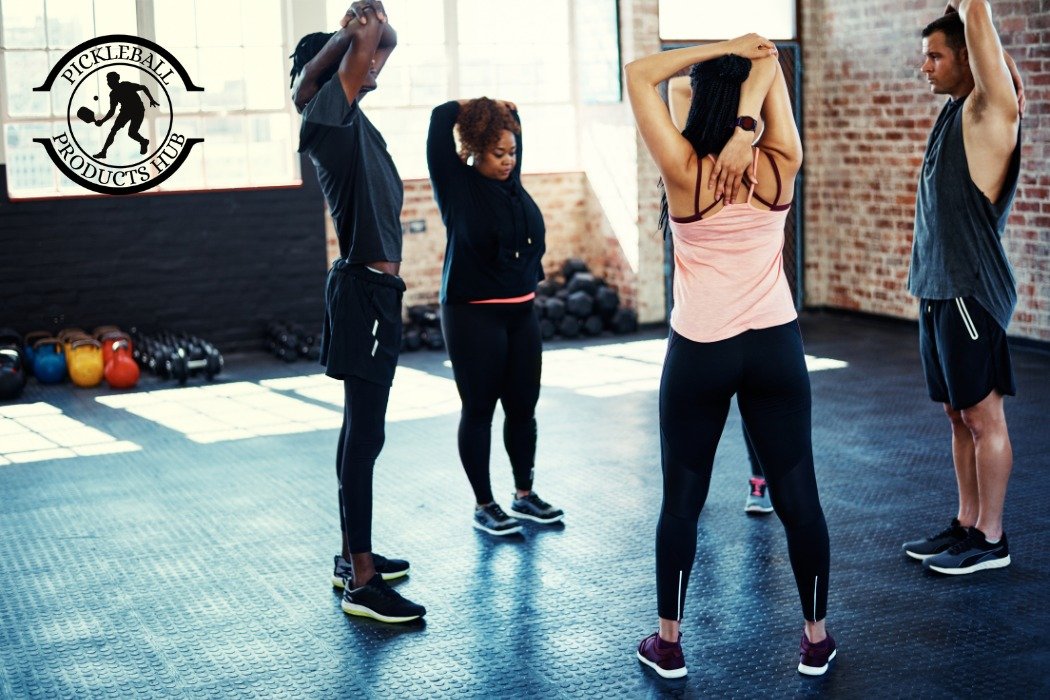
Stretching offers different but equally important reasons before and after pickleball games. Stretching is done as a warm-up to get the muscles ready for exercise. Gentle, controlled warm-up stretches are used to progressively increase muscle temperature and heart rate. Before the game begins, stretch to improve flexibility and avoid stiffness.
After the game, when the muscles are already warm, cool-down stretches are performed. Stretches during the cool-down release tension from the muscles and avoid stiffness that may have developed during the game. In addition to removing waste products from the muscles, cool-down stretching speeds up recovery and helps avoid pain.
Many athletes decide not to stretch during the cool-down because they are tired or think it is pointless. Cool-down stretching is important for avoiding discomfort and pain, so this is a harmful habit. Warm-up and cool-down stretches should be part of a complete stretching exercise.
Types of Pickleball Stretching Exercises
There are so many exercises that keep a man active and make him strong. Exercise is helpful for playing in Pickleball and also protects you from injuries. Let’s get into a few exercise details:
1. Stretching the Neck and Upper Back for Pickleball Safety
Pickleball also heavily involves the neck and upper back. As they track the ball, players are constantly looking up, down, and sideways. Unexpected motions without stretching might cause neck pain and stiffness. Flexibility and relaxation can result from stretching the neck muscles. Flexibility and relaxation can be achieved by stretching the neck area.
Stretching the neck area can promote relaxation and flexibility. Stretching the upper back helps promote relaxation and flexibility. Leaning forward during games causes stress in the upper back for certain players. This issue can be reduced by stretching. Players feel comfortable and self-assured when their neck and upper back muscles are relaxed.
2. Shoulder Stretching Exercises to Prevent Pickleball Injuries
When playing pickleball, the shoulders are one of the most active parts of the body. The shoulders are used in all serves, volleys, and smashes. Infection of the surrounding muscles can result in pain and stiffness if the shoulders are not stretched out. Shoulder stretches improve range of motion and develop local muscles. This relieves pressure on the joints and absorbs shock.
A player’s performance is improved when their shoulders are stretched. In addition, stretching the shoulders can help prevent overuse problems caused by repeated swinging motions. Pickleball players who just forget to stretch experience shoulder pain. Regular shoulder stretching keeps the muscles balanced and helps avoid long-term injuries.
3. Arm and Elbow Stretching for Better Paddle Control
In pickleball, especially during fast attacks and strong shots, the arms and elbows are highly active. Weakness in grip strength and elbow pain might result from contracted forearm muscles. Maintaining flexibility and avoiding injuries can be achieved by stretching these muscles.
Pickleball elbow, a condition brought on by misuse of the forearm muscles, can be avoided by stretching the elbows. Stretching can increase blood flow to this area and assist relax the muscles. Relaxed muscles are less likely to be inflamed and painful.
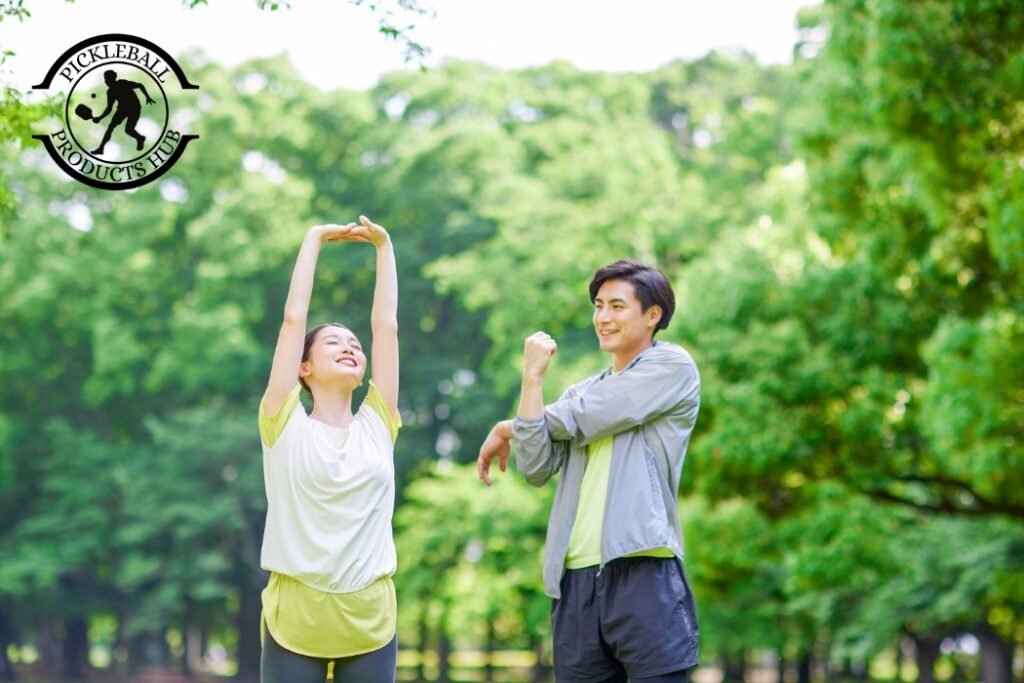
By allowing players to move their arms and wrists with no difficulty, arm stretching also improves paddle control. Arms that are flexible allow players to react fast to the ball and hit it accurately. Arm stretches on a regular basis help avoid injury and tiredness.
4. Core and Lower Back Stretching for Stability
For pickleball movement, strength, and balance, the back of the body and the center of the body are important. The body needs flexibility and core strength for every step and swing.
Lower back tightness can limit the range of motion and increase the risk of injury.
Stretching the lower back helps to improve posture and lessen tightness. When playing pickleball, the back’s flexible muscles make it simple to rotate and bend. This minimizes pain and reduces the pressure on the back.
In addition, stretching the core improves stability, which is necessary for quick direction changes. When a player’s core is strong and flexible, they may shift direction with confidence and more control. Daily muscle stretching improves stamina during extended pickleball matches and helps avoid back problems.
5. Hip Stretching Exercises to Improve Movement
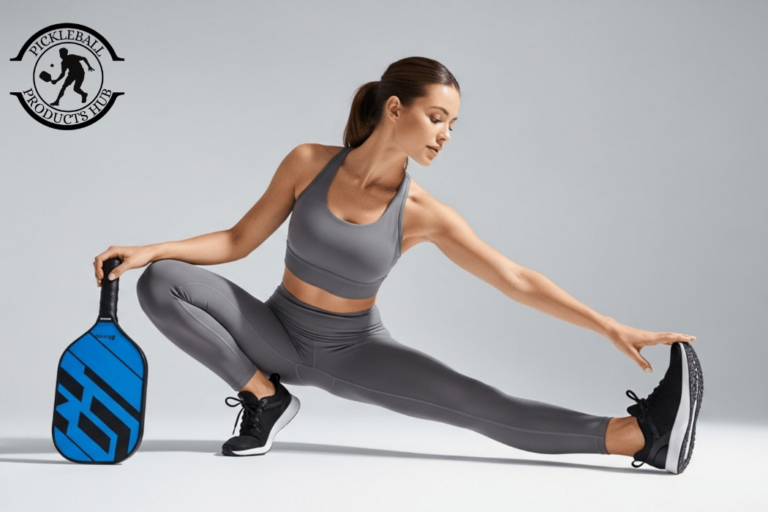
In pickleball, the thighs perform the most bending motions. Lunging, twisting, and side-stepping all demand hip flexibility. Stiff hips can restrict range of motion and increase strain on the lower back and knees. Including proper pickleball stretching exercises to prevent injuries helps the hips become more flexible and looser. Balance is enhanced, and shot transitions are made easier with flexible hips.
Players can recover more quickly and reach for shots more easily as a result. Groin pulls and hip pain can be avoided with hip stretching. Hip flexibility is important for appropriate movement on the pickleball court, yet this part of the body is frequently ignored.
6. Hamstring Stretching for Speed and Control
In pickleball, hamstrings are important for running, braking, and bending. Muscle strains and discomfort can result from tight hamstrings. Hamstring stretches can improve movement efficiency and flexibility. Players can run faster without overstretching or straining their muscles by extending their hamstrings.
Good posture and less pressure on the lower back can be achieved with loose hamstrings. By releasing stress in the knees, hamstring stretches can also help avoid knee problems. Pickleball players who have loose hamstrings are more comfortable and self-assured.
7. Calf and Ankle Stretching for Footwork
Pickleball requires excellent footwork, which heavily depends on ankle and calf flexibility. Mobility can be restricted, and Achilles tendon problems are possible from inflexible calf muscles. The muscles can be prepared for quick movements with the use of stretching exercises. Exercises that stretch the calf muscles improve balance and help avoid pulls and cramps.
Smooth turns and efficient court coverage are made possible by flexible ankles. The injuries, which are common in sports involving sudden stops and turns, can also be avoided with ankle stretching exercises. While playing, stability and confidence are enhanced by strong and flexible lower legs.
8. Knees and Surrounding Muscles Stretching
The muscles surrounding the knee are important for keeping the knees healthy, even if it is impossible to extend the knee directly. The quadriceps, hamstrings, and calf muscles can all be stretched to reduce knee pressure and maintain secure knee joints. Including proper pickleball stretching exercises to prevent injuries that target these muscles helps reduce stiffness and increase blood flow to the area.
For athletes who are older or have had knee issues in the past, this is especially important. Knee pain and injuries can be avoided by using the flexible muscles surrounding the knee as shock absorbers during movement.
Stretching as Part of a Complete Injury Prevention Routine
Stretching works best when combined with enough sleep, hydration, and comfort. When combined, these methods offer a strong basis for preventing injuries. Paying attention to the body is also important.
Stretching should never be forced to the point of discomfort, nor should pain be ignored. Regular, gentle stretching is safer and more effective. A well-rounded strategy will maintain players’ health and enable them to play pickleball painlessly for many years to come.
How Stretching Improves Long-Term Pickleball Performance?
Stretching improves performance in addition to reducing the risk of injury. A player with flexible muscles can move with ease, respond fast, and swing the racket effortlessly. On the court, athletes who follow regular pickleball stretching exercises to prevent injuries often report feeling lighter and more flexible. In addition, flexibility improves endurance.
Players experience less fatigue when their muscles are flexible. A player can prevent muscle weakness and recover more quickly in between games by stretching. Stretching improves balance, coordination, and posture over time. As a result, players consistently perform well and love the game.
How Stretching Frequency and Consistency Works for Best Results?
Game days shouldn’t be the only times to stretch. To take advantage of the benefits, stretching must be done regularly. Daily stretching keeps the muscles flexible and prevents stiffness from developing.
Players who stretch every day or a few times a week report feeling less pain and being more flexible. If performed frequently, even brief stretching exercises might be helpful. Stretching increases a player’s risk of injury, particularly if they play on a regular basis.
Common Stretching Mistakes Pickleball Players Make
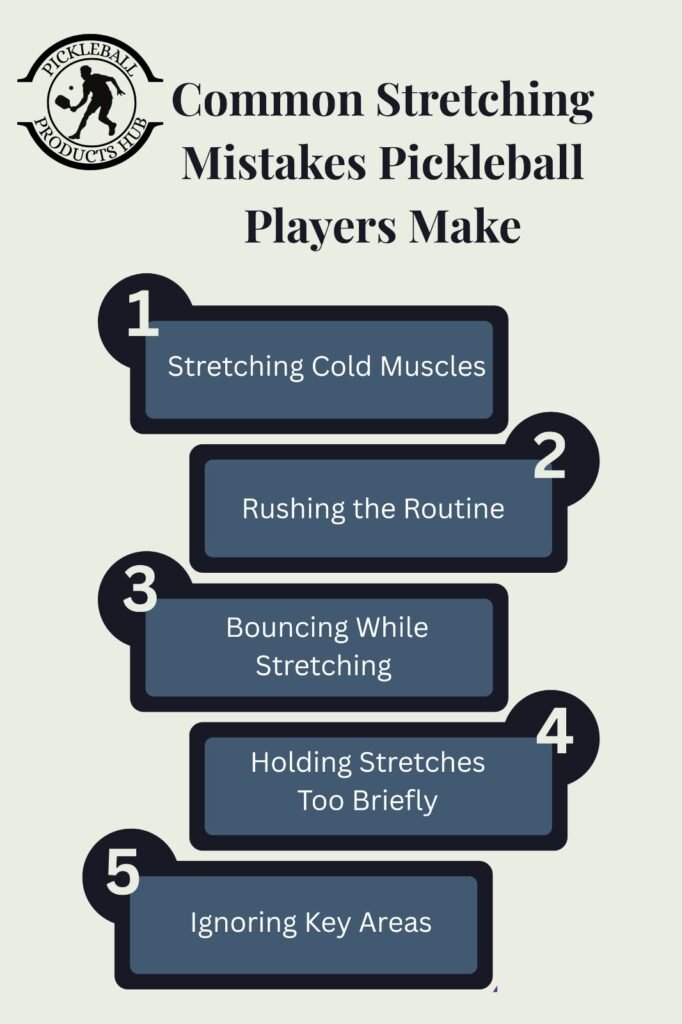
Many athletes hurry through their stretching routine or stretch incorrectly. Many athletes make the mistake of extending chilly muscles without first warming them. Instead of preventing harm, this may cause it. Bouncing during stretching is an additional mistake that can cause needless pressure on the muscles.
Stretching should always be done intentionally and slowly. Because muscles require time to relax, stretching for brief periods of time is likewise unhelpful. Another issue is neglecting certain body parts. Typically, athletes focus on their arms and legs while ignoring their necks, backs, and hips.
Benefits of Stretching Before Pickleball
In addition, stretching helps the mind get ready for the game. Before taking the court, players who stretch properly will feel more comfortable and focused. It will reduce anxiety and increase self-assurance. For pickleball, mental preparation is just as crucial as physical preparation.
Players might take a moment to relax and concentrate on their movements by stretching. Players will be able to make and carry out smarter decisions on the court. During a game, players will feel calmer and less pressured.
The Final Verdict
Pickleball seems like a simple game, but it actually puts a lot of stress on the body. Pickleball players are more likely to suffer an injury that could keep them from enjoying the game if they don’t stretch properly. Following proper pickleball stretching exercises to prevent injuries is important because stretching activities improve flexibility, prevent joint problems, and help the muscles get ready for exercise. Pickleball players can improve their balance, ease of movement, and speed of recovery by stretching.
In addition, pickleball players can prevent problems, including knee pain, elbow strain, shoulder pain, and muscle pulls, by stretching. Stretching activities during warm-up and cool-down are necessary for pickleball players who wish to increase their enjoyment of the game. In addition to preventing injuries, players who take stretching seriously will perform better on the court.
FAQs
1. How long should I stretch before playing pickleball?
Stretching for 10 to 15 minutes before playing is usually enough to prepare the body and reduce stiffness.
2. Is stretching more important for older pickleball players?
Yes, older players benefit greatly from stretching because it improves flexibility, balance, and joint comfort.
3. Can stretching alone prevent all pickleball injuries?
Stretching reduces risk but should be combined with proper technique, rest, and warm-up for the best protection.
4. Should I stretch even if I feel fine?
Yes, stretching helps prevent injuries before pain appears and keeps muscles flexible over time.
5. How soon will I notice benefits from regular stretching?
Most players notice reduced stiffness and better movement within a few weeks of consistent stretching.