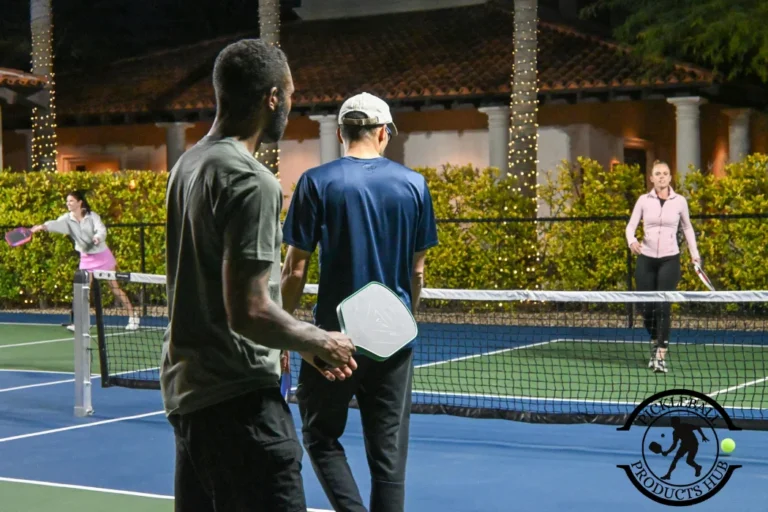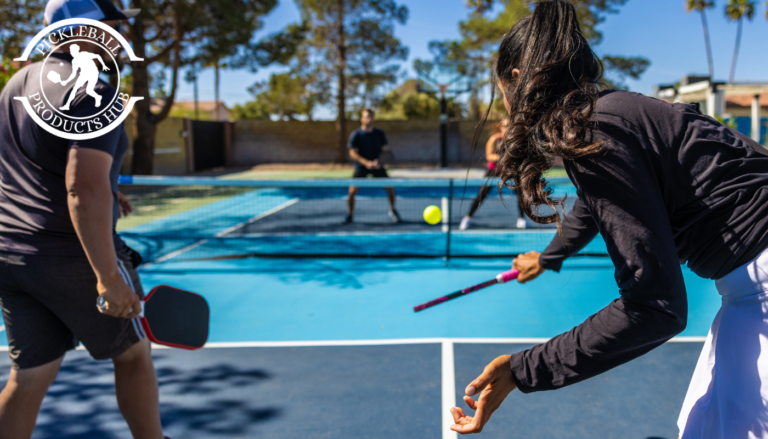

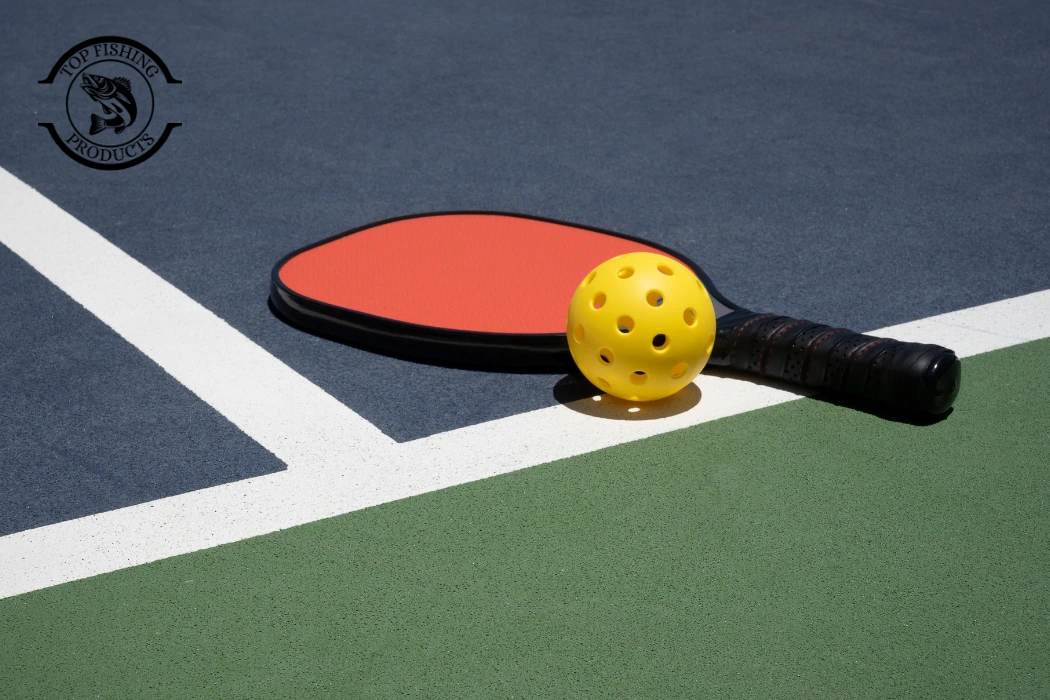
Pickleball is an interesting and entertaining sport that is gaining popularity worldwide. People of all ages can play this easy game. A paddle and a plastic ball with a hole are used to play the game. It can be played as a simple singles game, in which case each team will have one player, or a doubles game, in which case each team will have two players. To avoid the opposing player from hitting the ball back, the primary goal of the game is to hit it over the net.
You must understand pickleball’s regulations to play the game correctly. Pickleball has simple guidelines that make the game fun for all players. The regulations also guarantee everyone’s safety while enjoying themselves. You can play the game with confidence and get better at it if you understand the rules step-by-step. The first step to being an experienced pickleball player is understanding the rules. Let’s explore it:
Top-Notch Rules in Pickleball
This game has some boundaries, and players need to consider its terms to experience. These rules even teach you the best way of playing and alert you about what not to do. Let’s understand and check how it works and why it’s important to learn:
Pickleball Court and Equipment Rules
There are a few things to know about the court and the equipment before you start playing pickleball. Like a badminton court, the pickleball court is square in shape. It is 44 feet long and 20 feet wide. The court is evenly divided into two halves by a net in the center. In comparison to the edges, the middle of the net is slightly lower. There are a non-volley zone and a service court on each side of the court. The kitchen is the term used to describe the non-volley area.
Each side is seven feet away from the net. A strong paddle made from wood or composite materials is necessary for a player. The ball must be lightweight and made of textured plastic. For the game to be fair, both the paddle and the ball must meet the requirements. Understanding the equipment and court layout makes it easier to play the game accurately and without any mistakes. The first step to understanding pickleball regulations is learning how to serve and move around the court.
Serving Rules
One of the most important parts of pickleball is serving. The serve is the first move in every game; mastering the right serve technique is important. It is necessary to stand behind the baseline when serving. When serving a pickleball, the paddle should rise upward since this is known as an underhand serve. When serving a pickleball, at least one foot should remain behind the baseline, and the ball should be served below waist level.
In addition, the pickleball should be served diagonally to the service court on the other side. A fault is called, and the other side scores a point when a pickleball strikes the non-volley zone during a serve. Every member of a team can serve during a doubles match before the turn is transferred to the other team. Serving in line with the rules is important for accuracy, which helps one win a game at the start of a rally. A proper serve is necessary for a proper game.
The Double Bounce Rule
One of the primary pickleball regulations is the double-bounce rule. The game is more equal and balanced thanks to the double-bounce regulation. According to this rule, the ball must bounce on one side of the receiving team’s court after serving before being returned to the opposing team’s side. After letting the ball bounce on their side, the serving team should strike it once again. This suggests that before hitting the ball when it is in the air, each team should let it bounce at least once.
Players are then allowed to groundstroke and volley the ball. To help players avoid hurrying to the net too soon, the double-bounce rule is important. This regulation gives each player enough time to find a position on the court that suits them. All players must understand and follow the double-bounce rule because it maintains the game longer, fair, and strategic. Players frequently use this rule to effectively plan their game.
Non-Volley Zone Rules
One of the most important areas on a pickleball court is the non-volley zone. The non-volley zone is located seven feet from the net on each side. A volley cannot be made by a player inside this area. When a player hits a ball before it touches the ground, it’s called a volley. A player gets a fault both when they are on the line and when they volley while inside the non-volley zone. When a player can see the bounced ball, they can pass this area and score a point.
A player can avoid standing close to the net and wrongly smashing a ball by following the non-volley zone guidelines. Because a player cannot collide with another player near the net, the regulations also contribute to the game’s increased safety. While it allows the player to create a strategy for the game, the non-volley zone restrictions are important.
Scoring Rules
Pickleball uses a simple scoring system. Only the serving team can score points. When the serving team wins a rally, they earn one point and continue serving. If the receiving team wins the rally, they gain the serve but do not score a point.
Most games are played to 11 points, and a team must win by at least 2 points. If the score reaches 10–10, play continues until one team leads by two points.
In doubles, players announce three numbers before each serve: the serving team’s score, the receiving team’s score, and the server number (1 or 2). These rules keep the game structured, fair, and easy to follow.
Fault Rules
In pickleball, a player makes a fault when they break a rule. Because they instantly end the game, mistakes are extremely serious. The server switches servers when there is a problem with the serving team. The serving team scores a point when the receiving team makes a mistake. Hitting the ball out of bounds, hitting the net, and volleying in the non-volley zone.
Violating the double-bounce rule are a few of the mistakes that can happen during the game. There may also be a problem if the serve does not get to the appropriate service zone. A mistake may also occur if a player crosses the baseline when serving. To make sure that players don’t commit mistakes, whether on purpose or accidentally, the rules around mistakes are extremely important.
Out of Bounds Rules
The out-of-bounds regulations are simple but important. The goal is for the ball to land inside the lines that mark the court. The game is over if the ball crosses the lines. Except for the serve, where the line is not supposed to be in the ball, the ball should be in if it touches the line. In order to find out where the ball landed, players are expected to pay attention to it.
The game ends quickly if the ball crosses the line. One aspect of sportsmanship is naming the balls. The regulations mentioned above ensure that there are no issues and make the game fair. For the game to proceed successfully, the out-of-bounds regulations guarantee that it is played honestly and without cheating.
Doubles Play Rules
Doubles pickleball has specific rules. Each team has two players, and both players serve before the turn passes to the opposing team. Only one player serves at the start of the game, but eventually, both teammates take their turns. Players must serve from the correct service court according to the score.
After each point, partners switch positions as needed. Clear communication is essential so both players know who is striking each shot. These rules ensure fair participation and balanced gameplay. Because doubles involves teamwork and strategy, each team must plan every move carefully to win.
Singles Play Rules
Singles play differs from doubles in that each side has only one player. When the server’s score is even, they serve from the right side; when it’s odd, they serve from the left. The serve must always land diagonally in the correct service area.
Because one player covers the entire court, singles requires speed, agility, and endurance. Without a partner, players must move quickly, anticipate shots, and maintain focus throughout the rally. Understanding the singles rules helps players control rallies, make smart decisions, and increase their chances of winning.
Serving Strategy and Positioning Rules
In pickleball, serving requires more than simply following the rules — it demands strategy. The server must stand behind the baseline and deliver a controlled, underhand serve. A smart server aims deep and targets areas that make the return difficult for the opponent.
In doubles, the server must also consider their partner’s position to maintain proper court coverage. After serving, players should quickly move into a strong defensive or offensive position. A well-planned serve combined with smart positioning can create early pressure and increase the chances of winning the rally.
Ball Contact and Paddle Rules
Pickleball rules clearly state that players must strike the ball only with a paddle. Players cannot hit the ball with their hands, arms, or any other object. They must not throw or carry the ball — they must hit it cleanly.
Players must also avoid double hits, where the ball contacts the paddle more than once during a single stroke, as this counts as a fault. In addition, the paddle must meet standard safety and quality requirements. These rules ensure fair play and keep the game consistent for everyone.
Time and Break Rules
To maintain safety and fairness, pickleball includes specific time and break rules. Players can take short breaks of one to two minutes between games or sets to rest, hydrate, or adjust their equipment. Although rallies have no time limit, players should serve and play at a steady pace to keep the game moving smoothly.
In tournaments, officials may enforce time limits between points and games to prevent unnecessary delays. Players must also wait until the court is clear before starting a point. These rules ensure smooth gameplay, reduce conflicts, and help players stay focused and ready to perform at their best.
Pickleball Safety and Sportsmanship Rules
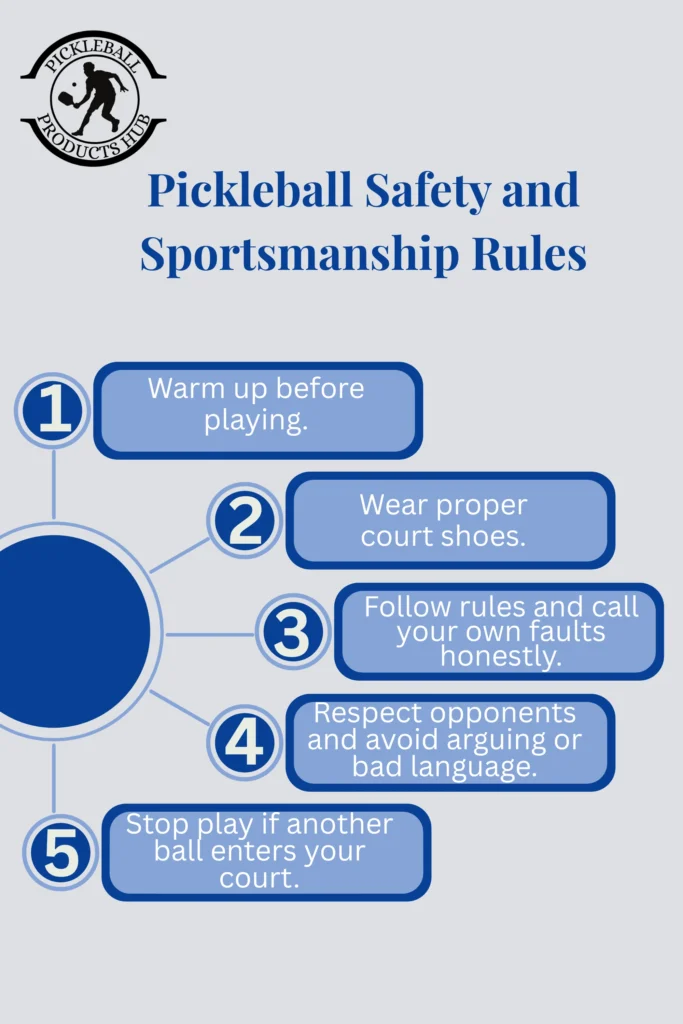
In pickleball, safety and sportsmanship regulations are important. To prevent mishaps, participants should warm up before beginning the game. When playing the game, players should wear appropriate footwear to prevent slip-and-fall mistakes. While playing the game, players should show respect for competitors and be honest about their mistakes.
While playing the game, players are not allowed to yell, disagree, or use inappropriate language. To maintain safety, players should stop right away if the ball from the opposite court reaches their court. Both safety and sportsmanship are important parts of the game. Respecting one another is just as important in pickleball as winning the match.
Conclusion
Everyone can enjoy and play pickleball fairly if they learn the rules step-by-step. The equipment needed, the pickleball court, serving, double bounce, non-volley zones, scoring, faults, singles, and doubles are all covered by the pickleball regulations. In pickleball, safety and sportsmanship regulations are also important. All pickleball rules must be followed in order for participants to advance their abilities, enjoy themselves, and play the game safely.
Pickleball can be played competitively in competitions or recreationally with friends. Every player will be able to play pickleball appropriately if they are familiar with the regulations. Pickleball players can enhance their abilities, strategy, confidence, and teamwork by following the regulations. Pickleball is an enjoyable, competitive, and equitable game for all players.
Frequently Asked Questions
What is the double-bounce rule in pickleball?
Before the players hit their volleys, the ball will bounce twice, once on each side of the court, as per the double-bounce rule. This way, the game will be fair for both teams as they get a chance to position themselves.
Can I volley in the non-volley zone?
No, if your feet are placed inside the kitchen or non-volley zone, you are not allowed to hit the ball while it is in the air. When your feet are placed inside the kitchen area, you will not be able to hit the ball until it bounces.
How do I score points in pickleball?
Points may be scored only by the service team. The service team receives one point when they are successful. Only the serve, and not the points, may be won by the receiving team.
How should I serve in pickleball?
If you stand behind the line, you will strike the ball with your hand under the ball, causing the ball to go over the net and land in the service box behind the opponent’s court. One foot should be behind the line.
What happens if the ball lands out of bounds?
The game ends when the ball lands outside the lines. This is a foul. If a ball touches the lines, it is in unless it is being served.