
Pickleball has become one of the world’s fastest-growing sports. It is enjoyable to play and a simple sport to master. With this, pickleball beginners often experience confusion when they learn about “the kitchen” for the first time. In very simple terms, pickleball kitchen rules will be covered in this article.
Pickleball kitchen, pickleball kitchen guide, pickleball kitchen and standing, pickleball double rules, pickleball kitchen fault, and pickleball faults to avoid are all explained in this article. Now let’s get started:
What Is the Kitchen in Pickleball?
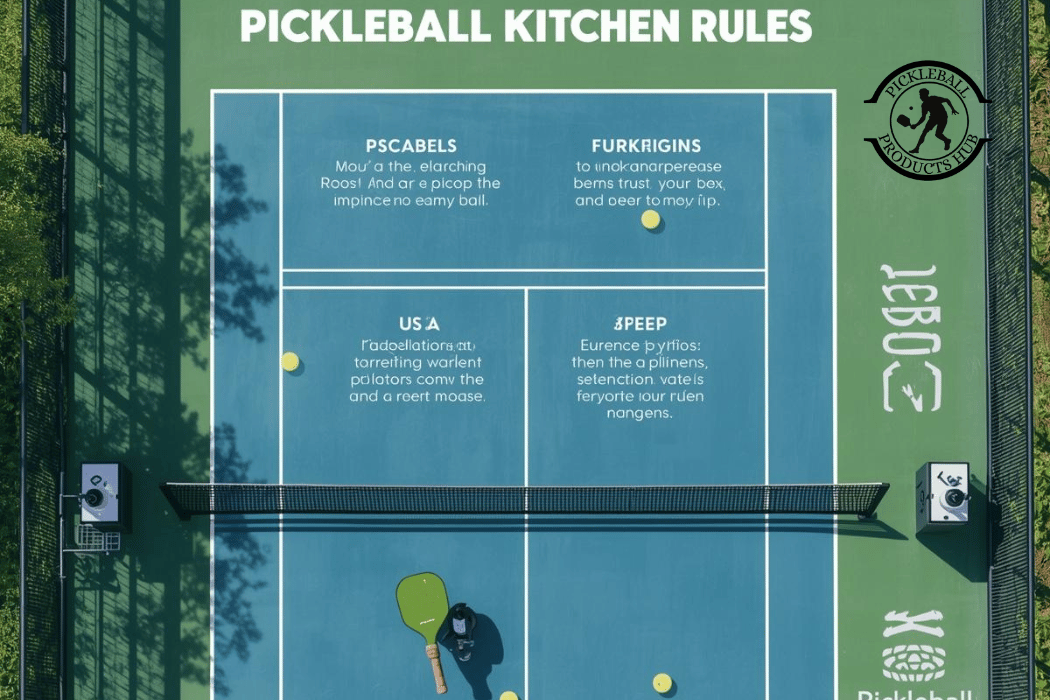
In pickleball, the area close to the net on both sides of the court is referred to as the kitchen. The non-volley zone is another term for the kitchen in pickleball. This area is seven feet wide and extends side to side parallel to the net. In pickleball, the kitchen is mostly used to keep players from getting too close to the net and then slamming the ball down.
Pickleball would be extremely violent and unfair without the kitchen rule. Focusing on the parallel line that runs next to the net is an example of finding the kitchen on a pickleball court. The kitchen includes the space between the parallel lines and the net.
Key Pickleball Kitchen Rules Explained Clearly
The most important kitchen rule in pickleball is that volleys are not allowed inside the kitchen. A volley means hitting the ball before it bounces. Let’s discuss rules:
1. No Volleys in the Kitchen
A pickleball player is not allowed to make contact with the ball in the air from the kitchen, which is one of the game’s most important rules. In other words, if a player is standing in the kitchen or even touches the kitchen line with their feet, they are not permitted to volley the ball.
A touch made by the ball before it bounces is called a volley. The goal of the kitchen rule is to keep players from regularly placing themselves close to the net and making forceful volleys. The kitchen line is a part of the kitchen.
2. Momentum Fault Rule
The momentum rule is sometimes misunderstood, especially by players who are new. It’s important to think about what to do next, even after you’ve sent the ball out of the kitchen. While striking the ball is allowed.
Moving into the kitchen after hitting the ball is still considered a mistake. This rule’s constant goal is to highlight the importance of striking the ball with some balance, instead of rushing into the net.
3. Entering the Kitchen for Bounced Balls
As long as the ball has a chance to bounce, you are free to enter the kitchen whenever you like. You can enter the kitchen when the ball enters. Attempt to return the now-bouncing ball.
Even remain there until the shot has been returned. After returning a bouncing ball, there’s no need to rush out of the kitchen to return to the playing position. This is simply true if the ball was hit while it was in the air.
4. Foot Faults and the Kitchen Line
When playing in the kitchen, footwork is a skill that is quite important. A fault will be called if any part of your foot comes into contact with the kitchen line while you are volleying.
You will therefore lose the point if even the tip of your toe touches the line. When a player is ready to volley, they should make sure there is space between their feet and the kitchen line, which serves as the area’s boundary.
5. Equipment and Clothing Count as You
Everything you carry or wear counts as a part of your body when playing pickleball. This may be your hat, your clothes, your paddle, or anything else you might be holding.
A mistake is made when the paddle, clothing, hat, or any other item comes into contact with the kitchen or kitchen line during a match. This could happen when your paddle enters the kitchen following a volley or even when the hat enters the kitchen following a shot.
6. Kitchen Rules in Doubles Play
Kitchen regulations also apply to both players collectively in doubles pickleball. The entire team will be responsible if one player makes contact while in or over the kitchen.
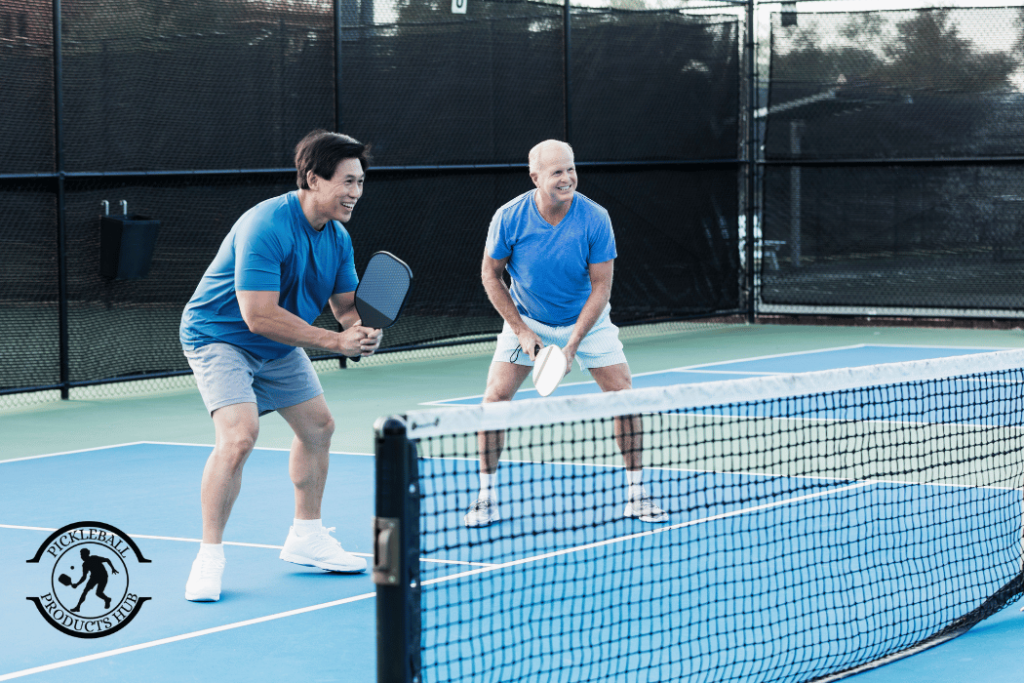
In addition, it is still a fault if players come into contact with one another during a volleyball match and that allows enter the kitchen. Because of this, player positioning and communication play an important role during fast-paced doubles pickleball matches.
Pickleball Kitchen Rules in Doubles
The kitchen rule is the same in doubles pickleball as it is in single pickleball, mistakes may happen because there are four players. Players need to avoid aligning. Volleying players must exercise care so they don’t end up in the kitchen first. In doubles, communication is important.
The majority of the mistakes are caused by players moving at the same time and losing their balance. Simply yelling out terms like “mine” or “yours” may improve communication. Due to the restrictions caused by the kitchen rule, opponents frequently make mistakes when players in doubles use a soft paddle touch, commonly known as a dink, to keep the ball low.
Pickleball Kitchen Rules for Beginners
The kitchen regulations may first be confusing to beginners. A lot of beginners are likely to forget where their feet are on the court since they only concentrate on hitting the ball. Points are lost due to the possibility of faults. For beginners, the first rule is quite simple. You are not allowed to enter the cooking area if the ball is in midair. You can access the kitchen area if the ball lands there.
Being careful with the line in the kitchen area is another important volleyball regulation for beginners to pay attention to. When volleying a ball, it is not safe to stand on the line. Before you make contact with a ball in midair, you must plant both feet on the back side of the line. When approaching the net before making contact with a ball above at full speed, beginners must take caution.
Why Is It Called the Kitchen in Pickleball?
In reality, this section of the court was given the nickname “kitchen” by players. Although the exact cause of the nickname is unknown, many people think it comes from the phrase “if you are in the kitchen, you are in trouble.” Players who find themselves in the kitchen at the incorrect time usually make a mistake since they are unable to strike while in this zone.
As time passed, the name gained popularity and is now commonly used by both officials and players, replacing the slightly more formal term “non-volley zone.” The laws related to the kitchen are extremely strict and important to follow, while the name itself sounds easy.
How Does the Kitchen Work in Pickleball?
Controlling where and how you can hit the ball close to the net is how the kitchen works. The most well-known kitchen regulation is that you are not allowed to hit the ball in the air while standing in the kitchen. This is referred to as a volley, volleys are prohibited in the kitchen. You can enter the kitchen and strike the ball if it bounces there first, but if not, you are not allowed to enter.
After hitting the ball, you have the option to either stay there or leave. The issue comes when you hit the ball before it bounces. The kitchen itself includes the kitchen’s line. When volleying, it is a mistake if your foot touches the line. This rule applies whether you’re playing solo or doubles. The game’s format does not affect the kitchen rules.
Can You Stand in the Kitchen in Pickleball?
There is one requirement that must be met before you can stand in the kitchen. It’s a common misunderstanding between beginners that the kitchen is completely off-limits. You can stand in the kitchen whenever you want as long as you don’t hit the ball in the air. You can surely enter the kitchen and hit the ball back once it has bounced.
It’s also OK to wait for the ball to return while standing in the kitchen. This restriction only applies during the hit. Your foot, shoe, or even your movement touching the kitchen during the shot is a mistake. You lose a point even if your toe touches the line after hitting it.
What Is a Kitchen Fault in Pickleball?
Kitchen fault happens when a player ignores any of the non-volley zone’s regulations. The majority of kitchen mistakes happen when players hit the ball while standing in the kitchen, when their bodies are in the kitchen area, or when they touch the kitchen line. Momentum is a further major problem that occurs.
It will still be considered a fault if the player smashes the ball outside of the kitchen area and their momentum carries them within. Because they typically happen during fast-exchanging volleys close to the net region, kitchen mistakes may be very discouraging, especially for beginners.
How to Avoid Kitchen Faults in Pickleball?
Being aware of your foot location before making contact with the ball is a good place to start if you want to prevent kitchen mistakes. This is a practice that can be maintained over time and has an important effect. Balance is another important part.
When a ball is volleyed, players have to keep from stretching too far. When a volley seems to go too far forward, it might be simpler to bounce the ball instead of taking a chance on a kitchen mistake. Dinking exercises might help you stay calm around the kitchen.
Is the Kitchen Line In or Out?
Keeping in mind that the line is in the kitchen is important. During a volley, you are considered to be in the kitchen if your foot reaches the line. It’s a disadvantage even if your shoe’s tip touches the line. Always maintain a small distance between your feet and the kitchen line when volleying for safety.
Why the Kitchen Rules Make Pickleball Better?
The purpose of the kitchen regulations is not to disturb. They exist to ensure that pickleball is fair and pleasurable for every player. The stronger or taller person would always bash their way through without the kitchen.
Balance is achieved in the kitchen by rewarding skill, patience, and strategy. By restricting aggressive net plays and collisions, these regulations also help to lower the number of injuries.
The Importance of Dinking Near the Kitchen
A soft shot that falls into the opponent’s kitchen is called a dink. One of the most important pickleball techniques to learn is dinking. Players are forced to let the ball bounce after hitting because they are unable to volley from the kitchen. It basically slows down the game and gives players more chances to make mistakes.
Dinking helps players stay in control and stay clear of dangerous smashes near the net. Most importantly, mastering the art of dinking can improve consistency and lower the frequency of kitchen mistakes for both new and experienced players.
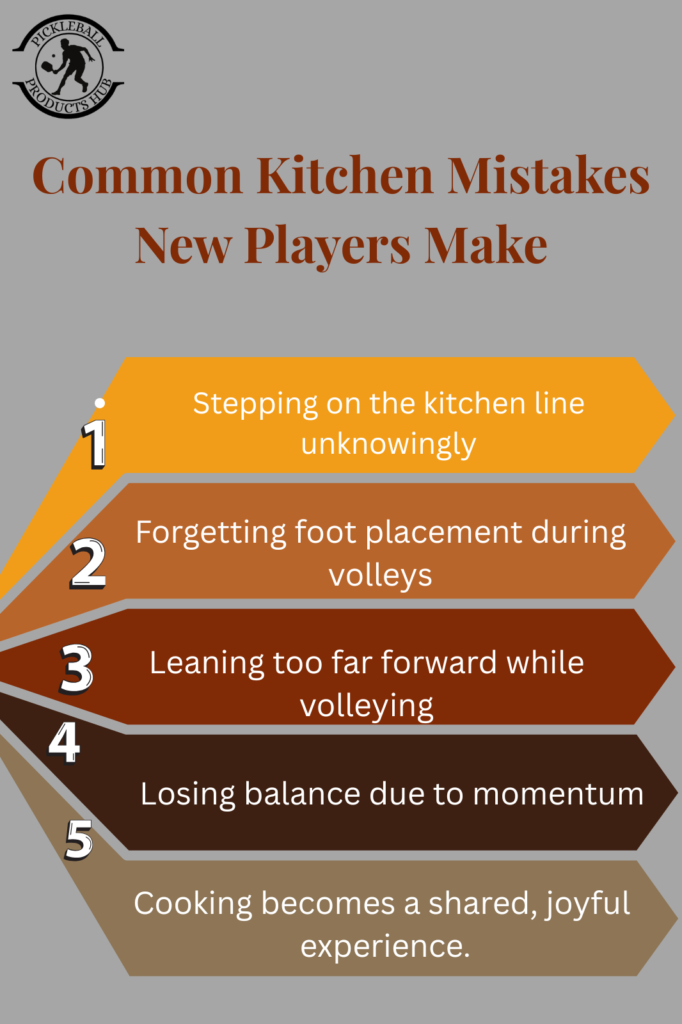
Common Kitchen Mistakes New Players Make
Stepping on the kitchen line without realizing it is a common mistake. When players focus on the ball and forget to watch their foot placement, this happens. Leaning too far forward during volleying is another mistake. Leaning forward could result in a loss of balance and a fall due to momentum.
Even if your feet begin outside the kitchen. The majority of beginners often remain totally outside or enter the kitchen at the wrong moment since they have no idea of the concept of appropriate entry. These are common mistakes that can be corrected with knowledge and practice.
Final Thoughts
One of the first stages of learning pickleball is to understand the basic rules. While being strict at first, these guidelines will become easy with experience. You can avoid unnecessary mistakes and improve your game by understanding when you are allowed to stand in the kitchen.
How volleys operate, and how to control your movement. In pickleball, control, patience, and smart placement are more important than strength. You will become a competent and confident player on the court if you understand the kitchen rules.
FAQs
Can I step into the kitchen after hitting a volley?
No, you cannot. Even if you hit the ball outside the kitchen, stepping into the kitchen afterward due to momentum is a fault. You must remain outside the kitchen until the ball bounces.
Is the kitchen line part of the kitchen?
Yes, the kitchen line is considered part of the kitchen. If your foot, paddle, or any part of your body touches the line while volleying, it counts as a fault.
Can I stand in the kitchen if the ball has bounced?
Yes, you can. If the ball bounces inside the kitchen, you are allowed to step in and return the shot. You can also stay in the kitchen after hitting the bounced ball.
Do kitchen rules apply in doubles?
Yes, they do. Both partners must follow the rules. If one player touches the kitchen or breaks a rule, it is a fault for the whole team. Partners also need to avoid touching each other in ways that cause a kitchen fault.
What counts as part of me in the kitchen?
Anything you are wearing or holding counts as part of your body. This includes paddles, hats, or clothing. If any of these touch the kitchen during a volley, it is considered a fault.